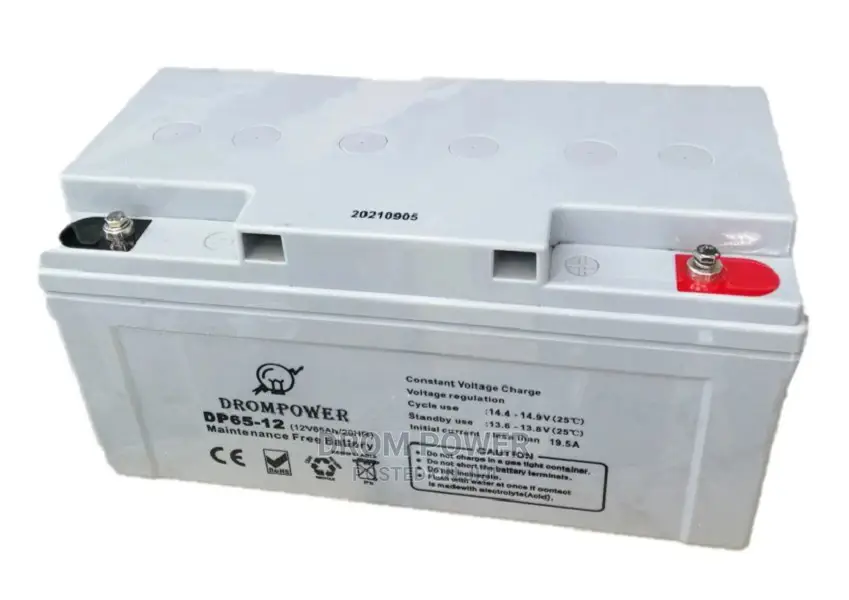
Lead Acid 12V 65AH Battery
A 12V 65AH lead-acid battery is a common type of battery used in various applications, including backup power supplies, solar energy systems, and automotive starting. Here’s a breakdown of what the specifications mean and what to consider:
Specifications:
- Voltage (12V): This indicates the nominal voltage of the battery. In this case, it’s 12 volts, which is standard for many applications.
- Capacity (65AH): This stands for ampere-hours. It means the battery can theoretically provide 65 amps of current for one hour or 1 amp for 65 hours before needing a recharge.
Types of Lead-Acid Batteries:
- Flooded Lead-Acid Batteries: These are the most common and least expensive. They require regular maintenance, such as checking and topping off the electrolyte levels.
- Sealed Lead-Acid Batteries (AGM or Gel): These are maintenance-free and can be installed in various orientations. AGM (Absorbent Glass Mat) and Gel batteries have different electrolyte technologies but are both sealed.
Considerations:
- Charge and Discharge Cycles: Lead-acid batteries generally have a lifespan measured in charge/discharge cycles. The more cycles they go through, the shorter their lifespan will be.
- Temperature Sensitivity: Lead-acid batteries can be sensitive to extreme temperatures, which can affect their performance and lifespan.
- Maintenance: Flooded lead-acid batteries need regular maintenance, including checking electrolyte levels and cleaning terminals. Sealed types require less maintenance.
Applications:
- Backup Power: Useful in uninterruptible power supplies (UPS) to provide power during outages.
- Solar Systems: Often used in solar energy setups to store electricity generated by solar panels.
- Automotive: Used in cars and other vehicles to start engines and power electrical systems.
Safety and Handling:
- Ventilation: Ensure the battery is used in a well-ventilated area, especially for flooded types, to prevent the buildup of explosive gases.
- Proper Charging: Use a charger compatible with lead-acid batteries to avoid overcharging or undercharging.
- Avoid Short Circuits: Keep the terminals clean and avoid creating a short circuit, as lead-acid batteries can release gases and cause a hazardous situation if damaged or mishandled.
Quick Links